
Showing posts with label Festivals. Show all posts
Showing posts with label Festivals. Show all posts
 Dussehra (Vijaya Dashami, Dasara, or Dashain) is a Hindu festival that celebrates the victory of good over evil. It is a gazetted holiday in India, which is marked on the 10th day of the bright half (Shukla Paksha) of the month of Ashvin (Ashwayuja), according to the Hindu calendar.
Many people of the Hindu faith observe Dussehra through special prayer meetings and food offerings to the gods at home or in temples throughout India. They also hold outdoor fairs (melas) and large parades with effigies of Ravana (a mythical king of ancient Sri Lanka). The effigies are burnt on bonfires in the evening. Dussehra is the culmination of theNavaratri festival.
There are many local celebrations in some areas in India that can last for up to 10 days. Local events include:
- Performances of the Ramlila (a short version of the epic Ramayana) in Northern India.
- A large festival and procession including the goddess Chamundeshwari on a throne mounted on elephants in the town of Mysore in the state of Karnataka.
- The blessing of household and work-related tools, such as books, computers, cooking pans and vehicles in the state of Karnataka.
- The preparation of special foods, including luchi (deep fried flat bread) and alur dom (deep fried spiced potato snacks), in Bengal.
Many Hindus also believe that it is lucky to start a new venture, project or journey on Dussehra. They may also exchange gifts of leaves from the Shami tree (Prosopis spicigera) as a symbol of the story of the Pandavas brothers' exile in the Mahabharata stories.
Government offices, post offices and banks are closed in India on Dussehra. Stores and other businesses and organizations may be closed or have reduced opening hours. Those wishing to use public transport on the day may need to contact the local transport authorities to check on timetables.
Dussehra celebrates the Hindu god Rama's victory over the demon king Ravana and the triumph of good over evil. The epic Ramayana tells the mythical story of the Lord Rama who wins the lovely Sita for his wife, only to have her carried off by Ravana, the demon king of Lanka.
Ravana plays an important role in the Ramayana. Ravana had a sister known as Shoorpanakha. She fell in love with the brothers Rama and Lakshamana and wanted to marry one of them. Lakshamana refused to marry her and Rama could not as he was already married to Sita.
Shoorpanakha threatened to kill Sita, so that she could marry Rama. This angered Lakshamana who cut off Shoorpanakha's nose and ears. Ravana then kidnapped Sita to avenge his sister's injuries. Rama and Lakshamana later fought a battle to rescue Sita. The monkey god Hanuman and a huge army of monkeys helped them.
The Mahabharata is another series of Hindu myths that play a role in the Dussehra festival. The Pandavas were five brothers who fought evil forces with a set of distinctive weapons. They abandoned their weapons and went into exile for one year. They hid their weapons in a Shami tree and found them at the same place when they returned from exile. They then worshipped the tree before going to a battle, which they won. This epic is also commemorated during Dussehra.

 sankranthi (Pongal) is the only festival of Hindu that follows a solar calendar and is celebrated on the fourteenth of January every year. sankranthi named also Pongal.sankranthi has astronomical significance: it marks the beginning of Uttarayana, the Sun's movement northward for a six month period. In Hinduism, Uttarayana is considered auspicious, as opposed to Dakshinaayana, or the southern movement of the sun. All important events are scheduled during this period. Makara Sankranthi refers to the event of the Sun entering the zodiac sign of Makara or Capricorn.
sankranthi
 signals the end of the traditional farming season. Farmers perform puja to some crops,the end of the traditional farming season. It also sets the pace for a series of festivals to follow in a calendar year.Bogi' is celebrated on January 13, 'Pongal' on Jan 14, 'Maattuppongal' on Jan 15.
the first day, Bhogi, the old clothes and materials are thrown away and fired, marking the beginning of a new life. The second day, the Pongal day, is celebrated by boiling fresh milk early in the morning and allowing it to boil over the vessel - a tradition that is the literal translation for Pongal. People also prepare savories and sweets, visit each other's homes, and exchange greetings. The third day, Mattu Pongal, is meant to offer thanks to the cows and buffaloes, as they are used to plough the lands.
Pelli Pata ( Bit )-2

Thus, the harvest festival of Pongal symbolizes the veneration of the first fruit. The crop is harvested only after a certain time of the year, and cutting the crop before that time is strictly prohibited. Even though Pongal was originally a festival for the farming community, today it is celebrated by all. In south India, all three days of Pongal are considered important. However, those south Indians who have settled in the north usually celebrate only the second day. Coinciding with Makara Sankranti and Lohri of the north, it is also called Pongal Sankranti.The Gift

www.devalyas.blogspot.com
 The car market in India's western Gujarat state has been booming in the last few months as more than 1,800 cars have been sold in Rajkot city itself.
Automobile dealers say that they are happy with the record sales, and impute the trend to the festival season.
"The business has been good since this financial year. As far as I think, in the last 10 years we have not seen such a market. If we talk about last month then we have sold approximately 1,800 plus vehicles as against 775 last year," said Rajni Patel, owner of an automobile dealership.
The sales figure has doubled against all monthly figures of the last decade.
Small and medium cars received the highest number of customers.
"Last month, Gujarat broke all the retail records, especially Maruti Suzuki sold 10,000 cars in Gujarat. The reasons are that the market has been very good. Rains have been good and rural penetration has been good, especially in Saurashtra region. In Gujarat, the Sensex has crossed 21,000 mark and also the increment in salaries of government employees, and the perks that they have got. Their buying capacity has increased. All these factors contributed to the good car market," said Vikas Gehlot, General Manager or a car dealership.
Rains in the region have also contributed to the spending capacity of locals.
The year 2008-2009 was bad for the automobile industry due to economic recession but most markets have come out of that situation.
On the first day of Navratri, Ford sold 111 cars in a day.
The dealers also say that the increase in car sales is also due to the living standards of people.
Most say car dealers say that they are hopeful of such a market in the coming months.
SHRAVAN : The Holy Month A time of rain storms and rain-drenched earth, Shravan is the holiest month of the year for Hindus. Each Monday of this month, known as Shravan Somvar, is a special day in Shiva temples where the dharanatra hangs over the linga or the idol to bathe it with water, day and night. Devotees pile the lmga high with Bel leaves and flowers and fast till sundown, eating only root vegetables and'fruit. The nanda deep, Only a 24 hour lamp, burns steadily in the temples signifying the eternal prayers of devotees ascending to heaven. NAGAPANCHAMI : The Snake Festival On the fifth day of the bright half of Shravan, Nagapanchan the festival of snakes is celebrated. Snake worship is more common in peninsular India than in the north. In Maharashtra, snake charmers go from house to house with dormant cobras ense nced in cane baskets, asking for alms and clothing. RAKSHABANDHAN : Celebration Of Fraternal Love Multi-hued rakhis present a festive appearance. A platter offered to a brother contains sweets, vermilhon and rakhis. The most widely celebrated festival of the month of Shravan occurs on its full moon day and is called Narali Purnima (Coconut Day) or Rakshabandhan. In the cycle of seasons, this full moon day marks the receding path of the monsoons. As the rains abate, sailors and fisherfolk worship a calmer sea, offering coconuts, flowers and sweets to it. In some parts of India, this day is reserved for changing the yagnyopavitor the sacred thread, when young boys discard their old yagnopavit and don a new one ritualistically. JANMASHTAMI : The Birthday Of Krishna Eight days after the full moon of Shravan, falls the festival of Janmashtami, the birthday of Krishna. For centuries this story has been relived every year on this dark, rainy night. Krishna, the divine son of Devaki and Vasudeva was born on a stormy night in a prison because his parents were imprisoned by Karnsa, the wicked king of Mathura. Karnsa, who was the brother of Devaki, killed all her children at birth because he had been warned that her eighth child would kill him. ONAM : Kerala’s Secular Pageant In the coconut tree lined backwaters of Kerala, boat races are an event of great pageantry. Artistic flower pattern are made in front of each home on Onam. Among the most colourful community festivals of India is Onam, specific to Kerala. It is celebrated as a secular state event by all the people whichever religion they may belong to. Coming at the end of the monsoons, in the month of Shravan, it commemorates the return of king Mahabali, a powerful mythical ruler of Kerala, once again to his kingdom and his adoring subjects. Bah resides in the netherworld as ordained by Vamana, the fifth incarnation of Vishnu. PATETI AND KHORDAD SAL : New Beginnings The older sect of Parsis celebrates the first day of the month of Farvardm as their New Year. On this day the Parsis review their actions in the past year, make resolutions for the new year, recite Patet or the prayer of repentance, hence the name Pateti, and promise to live in the righteous manner prescribed by their religious teaching. PARYUSHAN : Jams Remember Their Tirthankara Once again in the month of August, Jains celebrate the birth of the 24th tirthankara Mahavir, during Paryushan, an eight-day festival. |

A number of rituals are performed during the ten days of Onam, which starts on the Attam nakshatram of Chingam. Rituals such as Maveli Puja, Onathallu, Onakazhcha are rooted in the ancient legends and are followed in many parts of the state, since a long time. Apart from the rituals, enthralling games are played during the ten days, wherein small children, men and women take part with equal enthusiasm. Games such as 'Thumbi Thullal (folk dance performed by women), Kaikotti Kali, Pulikkali form a prominent part of the celebrations of Onam. In addition to this, sporting events such as Uthratadhi Vallamkali (snake boat race) are organized with zeal.
Onasadya is an inevitable part of Onam festival. Thiruvonam is the important day of Onam, wherein the lavish feast is organized. Lip-smacking recipes are prepared by the women in every Malayalee household. Intricate designs of 'rangolis' (with colored rice paste) and 'pookkalam' (with flowers) in front of the homes. There is a tradition of bestowing Onakkodi (new clothes especially purchased for Onam) upon the younger members of family by the elder ones. All the traditions and rituals of Onam attract thousands of tourists from across the country and the world, to Kerala, during the festival of Onam.
 The chaste bond of love between a brother and a sister is one of the deepest and noblest of human emotions. 'Raksha Bandhan' or 'Rakhi' is a special occasion to celebrate this emotional bonding by tying a holy thread around the wrist. This thread, which pulsates with sisterly love and sublime sentiments, is rightly called the ‘Rakhi’. It means 'a bond of protection', and Raksha Bandhan signifies that the strong must protect the weak from all that’s evil.
 The ritual is observed on the full moon day of the Hindu month of Shravan, on which sisters tie the sacred Rakhi string on their brothers' right wrists, and pray for their long life. Rakhis are ideally made of silk with gold and silver threads, beautifully crafted embroidered sequins, and studded with semi precious stones.
The Social Binding
This ritual not only strengthens the bond of love between brothers and sisters, but also transcends the confines of the family. When a Rakhi is tied on the wrists of close friends and neighbors, it underscores the need for a harmonious social life, where every individual co-exist peacefully as brothers and sisters. All members of the community commit to protect each other and the society in such congregational Rakhi Utsavs, popularized by the Nobel laureate Bengali poet Rabindranath Tagore.The Friendly Knot
It won’t be wrong to say the fashionable friendship band in vogue today is an extension of the Rakhi custom. When a girl feels a friend of the opposite sex has developed a kind of love too strong for her to reciprocate, she sends the guy a Rakhi and turns the relationship into a sisterly one. This is one way of saying, "let’s just be friends", without hurting the other person's soft feelings for her.The Auspicious Full Moon
In Northern India, Rakhi Purnima is also called Kajri Purnima or Kajri Navami, when wheat or barley is sown, and goddess Bhagwati is worshipped. In Western states, the festival is called Nariyal Purnima or the Coconut Full Moon. In Southern India, Shravan Purnima is an important religious occasion, especially for the Brahmins. Raksha Bandhan is known by various names: Vish Tarak - the destroyer of venom, Punya Pradayak - the bestower of boons, and Pap Nashak - the destroyer of sins.Rakhi in History
The strong bond represented by Rakhi has resulted in innumerable political ties among kingdoms and princely states. The pages of Indian history testify that the Rajput and Maratha queens have sent Rakhis even to Mughal kings who, despite their differences, have assuaged their Rakhi-sisters by offering help and protection at critical moments and honoured the fraternal bond. Even matrimonial alliances have been established between kingdoms through the exchange of Rakhis. History has it that the great Hindu King Porus refrained from striking Alexander, the Great because the latter’s wife had approached this mighty adversary and tied a Rakhi on his hand, prior to the battle, urging him not to hurt her husband.Rakhi Myths & Legends
According to one mythological allusion, Rakhi was intended to be the worship of the sea-god Varuna. Hence, offerings of coconut to Varuna, ceremonial bathing and fairs at waterfronts accompany this festival. There are also myths that describe the ritual as observed by Indrani and Yamuna for their respective brothers Indra and Yama.
Once, Lord Indra stood almost vanquished in a long-drawn battle against the demons. Full of remorse, he sought the advice of Guru Brihaspati, who suggested for his sortie the auspicious day of Shravan Purnima (fullmoon day of the month of Shravan). On that day, Indra's wife and Brihaspati tied a sacred thread on the wrist of Indra, who then attacked the demon with renewed force and routed him.
Thus the Raksha Bhandhan symbolizes all aspects of protection of the good from evil forces. Even in the great epic Mahabharata, we find Krishna advising Yudhishtthir to tie the puissant Rakhi to guard himself against impending evils.
In the ancient Puranik scriptures, it is said that King Bali's stronghold had been the Raakhi. Hence while tying the rakhi this couplet is usually recited:
Yena baddho Balee raajaa daanavendro mahaabalah
tena twaam anubadhnaami rakshe maa chala maa chala
tena twaam anubadhnaami rakshe maa chala maa chala
"I am tying a Rakhi on you, like the one on mighty demon king Bali. Be firm, O Rakhi, do not falter."
Why Rakhi?
Rituals like Rakhi, there is no doubt, help ease out various societal strains, induce fellow-feeling, open up channels of expression, give us an opportunity to rework on our role as human beings and, most importantly, bring joy in our mundane lives. “May all be happy
May all be free from ills
May all behold only the good
May none be in distress.”
May all be free from ills
May all behold only the good
May none be in distress.”
This has always been the idea of an ideal Hindu society.
DEVALAYALU MAGZAINE
 Hinduism as a religion is many-sided yet bound by a common search for Truth and to Hindus it means a way of life and a fellowship of faiths. With the advent of the Aryans, it originated as a simple form of worship of the forces of Nature, drawing in its system action in social organisations, local cults, deities’ diverse beliefs and modes of worship.
Nag-Panchami is an important all-India festival and is celebrated on the fifth day of the moonlit-fortnight in the month of Shravan (July /August). This is the time when serpents invariably come out of their holes that get inundated with rain-water to seek shelter in gardens and many times in houses. As such they pose a great danger to man.
May be theref
 ore, snakes are worshiped on this day. Right from the times when mankind started acquiring some sort of culture, Sun and Snake have been invoked with prayers and ritual worship in most of the countries. In India even before the Vedic times, the tradition of snake-worship was in vogue.
The Legend
In ancient India, there lived a clan by the name of "NAGAS" whose culture was highly developed. The Indus Valley civilisation of 3000 B.C. gives ample proof of the popularity of snake-worship amongst the Nagas, whose culture was fairly wide-spread in India even before the Aryans came. After the Naga culture got incorporated into Hinduism, the Indo-Aryans themselves accepted many of the snake deities of the Nagas in their pantheon and some of them even enjoyed a pride of place in the Puranic Hinduism.
The prominent Cobra snakes mentioned in the Puranas are Anant, Vasuki, Shesh, Padma, Kanwal, Karkotak, Kalia, Aswatar, Takshak, Sankhpal, Dhritarashtra and Pingal. Some historians state that these were not snakes but Naga Kings of various regions with immerse power.
The thousand-headed Shesh Nag who symbolises Eternity is the couch of Lord Vishnu. It is on this couch that the Lord reclines between the time of the dissolution of one Universe and creation of another. Hindus believe in the immortality of the snake because of its habit of sloughing its skin. As such Eternity in Hinduism is often represented by a serpent eating its own tail.
In Jainism and Buddhism snake is regarded as sacred having divine qualities. It is believed that a Cobra snake saved the life of Buddha and another protected the Jain Muni Parshwanath. To-day as an evidence of this belief, we find a huge serpent carved above the head of the statue of Muni Parshwanath. In medieval India figures of snakes were carved or painted on the walls of many Hindu temples. In the carves at Ajanta images of the rituals of snake worship are found. Kautilya, in his "Arthashastra" has given detailed description of the cobra snakes.
Fascinating, frightening, sleek and virtually death-less, the cobra snake has always held a peculiar charm of its own since the time when man and snake confronted each other. As the cobra unfolded its qualities, extra-ordinary legends grew around it enveloping it in the garble of divinity. Most of these legends are in relation with Lord Vishnu, Shiv and Subramanyam.
The most popular legend is about Lord Krishna when he was just a young boy. When playing the game of throwing the ball with his cowherd friends, the legend goes to tell how the ball fell into Yamuna River and how Krishna vanquished Kalia Serpent and saved the people from drinking the poisonous water by forcing Kalia to go away.
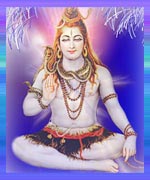 It is an age-old religious belief that serpents are loved and blessed by Lord Shiv. May be therefore, he always wears them as ornamentation around his neck. Most of the festivals that fall in the month of Shravan are celebrated in honour of Lord Shiv, whose blessings are sought by devotees, and along with the Lord, snakes are also worshiped. Particularly on the Nag-Panchami day live cobras or their pictures are revered and religious rights are performed to seek their good will. To seek immunity from snake bites, they are bathed with milk, haldi-kumkum is sprinkled on their heads and milk and rice are offered as "naivedya". The Brahmin who is called to do the religious ritual is given "dakshina" in silver or gold coins some times, even a cow is given away as gift.
EFFACED LEGACY: (Clockwise frtop left): The prakara wall of the Vyagrapurisvara temple at Tiruppulivanam sans its frescoes that were sandblasted recently; one of the Chola frescoes as it existed, in a file image provided by the Archaeological Survey of India; pillars with sculptures at the temple, also sandblasted and disfigu 1,200-year-old Siva temple of the Pallava period at Tiruppulivanam village in Kanchipuram district, Tamil Nadu, has been wiped clean of its beautiful Chola-period paintings. The frescoes, about 975 years old, have been sand-blasted out of existence.
Ironically, at a seminar organised on the temple premises on August 27, 2007, archaeologists, epigraphists and artists had decided on measures to preserve the paintings and inscriptions in the temple.
Two 16-pillared mantapas are among the temple’s treasures that have been destroyed. One of the mantapas, which was commonly called ‘madapalli’ or kitchen, had Tamil inscriptions dating back to Kulotunga Chola III (1215 A.D.), the Telugu Chola Vijayakanda Gopaladeva, Rajanarayana Sambuvaraya and others. The other mantapa, called Alankara Mantapa, belonged to the 16th century Vijayanagara period.
This destruction has taken place during “renovation” that the Hindu Religious and Charitable Endowments (HR and CE) Department officials are undertaking. As part of this exercise, they plan to pull down a 100-pillared mantapa just outside the temple and “rebuild it.”
The Vyagrapurisvara temple at Tiruppulivanam, near Uttraramerur, 95 km from Chennai, was one of the three temples in Tamil Nadu where Chola paintings existed. The others where they still exist are the Brihadeesvara temple in Thanjavur and the Vijayalaya Cholisvara temple near Pudukottai.
Earthmover at work
In the main temple itself, sandblasting had been done on the southern, northern and western walls of the prakara, on the sculptures on pillars and on the ancient Tamil inscriptions — in violation of a State government directive against sandblasting for renovating temples. The inscriptions on the outer wall of the sanctum sanctorum and the sculptures stand disfigured.
The temple existed during the reign of the Pallava king Nandivarman II in the 8th century A.D. The Rashtrakuta king Krishna III, the Chola kings Parantaka I, Rajendra I and Kulotunga I, the Sambuvaraya chieftain Rajanarayana and the Vijayanagara rulers added structures to it.
What stood out were the Chola frescoes, painted perhaps during the rule of Rajendra I, on the northern prakara wall. Dr. A. Padmavathy, retired Senior Epigraphist, Tamil Nadu Archaeology Department, said the paintings were of Siva as Tripurantaka (riding a chariot and armed with a bow and arrows to kill the demons of the three worlds) and Nataraja, and of Dakshinamurti, Narasimha, and Vishnu in “ananthasayana” posture. There were murals of Raja Raja Chola’s teacher Karuvur Thevar and of princes, princesses, dancing girls, ponds with lily and lotus flowers and wild animals. These frescoes do not exist today. The mantapas, one with ancient inscriptions, are gone.
When contacted, the temple’s executive officer, S. Senthil Kumar, of the HR & CE Department, said that “no paintings ever existed in the temple” and “no structure called Alankara Mantapa ever existed.”
He added that the ‘madapalli’ mantapa was demolished long before he took charge of the temple eight months ago. He said that “no sandblasting was ever done” and that only “water-wash and air-wash” were done.
However, informed sources asserted that the frescoes were sandblasted four months ago, the ‘madapalli’ mantapa demolished about six months ago and the Alankara Mantapa brought down a year ago.
More than 20,000 Hindus are expected to attend the consecration ceremony of the 105-year-old Sri Maha Mariamman temple in Malaysia.
The temple, located at Puchong in Selangor state, is one of the larger Hindu temples located outside India.
Temple chairman A. Sevaguru said preparations were being undertaken to ensure the temple, reconstructed at a cost of RM three million ($936,186), would be ready by May 23.
Sevaguru told The Star that they were preparing vegetarian food for 20,000 devotees. He said work on the temple building started in 2003.
Sevaguru said there would be six prayer sessions between May 20 and 23 for the devotees to place gold and silver rice in the inner sanctum.
The Yennai Saatruthal or anointment ceremony is a rare opportunity accorded to devotees and this will take place at 9 am on May 22, he said.
The temple was set up by South Indian contract labourers brought here by the British in 1905. Initially, the deities were made of earth and cement.
